

What if every line on your paycheck could be traced to a clear input? An itemized pay stub calculator estimates how your earnings, tax withholding, and deductions combine to determine take-home pay. But terms like taxable wages and pre-tax deductions can make the breakdown hard to follow, especially when an estimate differs from your employer-issued statement.
That confusion is understandable. Some deductions lower the wages used to calculate certain taxes, while others come out after taxes are calculated. This guide explains what the main lines in an itemized estimate mean, how they relate, and how to compare the result with your actual pay statement.
You’ll follow the calculation from gross earnings through federal, payroll, and state taxes to deductions and estimated net pay. You’ll also learn why estimates can differ from actual payroll results, so you can use a 2026 calculator as a practical reference, not a guaranteed match.
Key Takeaways
- An itemized pay stub calculator connects the figures you enter to an estimated paycheck breakdown, not an employer-issued statement.
- Follow the calculation from gross earnings to taxable wages, withholding, deductions, and estimated net pay.
- Progressive federal tax rates apply across income ranges, rather than applying one rate to all your wages.
- Use current figures from your records, then compare matching pay periods and line categories with your actual pay stub.
- Pre-tax and post-tax deductions affect the estimate differently, so check where each deduction appears before comparing net pay.
What an Itemized Pay Stub Calculator Shows
An itemized pay stub calculator estimates take-home pay and shows how earnings, taxable wages, tax withholding, deductions, and net pay connect. It uses the information you enter to create a line-by-line estimate, not an employer-issued pay statement or a guarantee of what you’ll receive.
A pay stub, also called a payslip, records pay and related details for a work period. Wikipedia’s overview of what a payslip is offers a broader explanation of its purpose and typical contents. A calculator uses similar categories to make paycheck calculations easier to follow, but it doesn’t replace your employer’s payroll records.
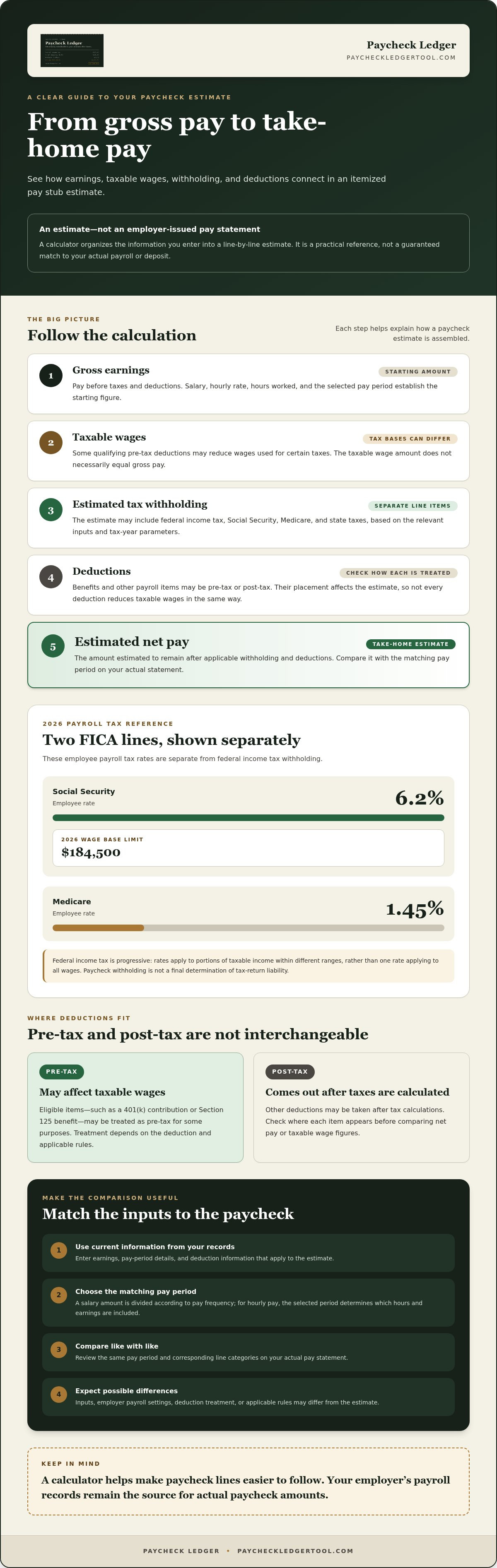
The order matters: gross earnings are the starting point, taxable wage amounts help determine applicable taxes, and withholding and deductions reduce what remains as net pay. A 2026 estimate may include federal income tax, Social Security, Medicare, state taxes, and eligible pre-tax deductions, depending on the calculator’s inputs.
Which Earnings and Pay Period Details Appear?
Gross pay is your earnings before taxes and deductions come out. For salary-based pay, the estimate starts with your salary and pay schedule. For hourly pay, it uses your rate and the hours worked during the selected period. The calculator may also need other earnings information when it applies to your situation.
Pay frequency sets the timeframe for the estimate, such as a weekly or biweekly period. The same annual salary produces a different gross amount per paycheck depending on how often you’re paid. For hourly workers, the selected period determines which hours and earnings belong in the calculation. Choose the period that matches the paycheck you want to estimate.
How Do Withholding and Deductions Differ?
Tax withholding is money withheld from wages for applicable taxes, such as federal income tax, Social Security, Medicare, and state taxes. The taxable wage amount used for a tax calculation may differ from gross pay because some qualifying pre-tax deductions can reduce wages subject to certain taxes.
Deductions are amounts taken from pay for benefits or other payroll items. A 401(k) contribution or Section 125 benefit may be treated as pre-tax for some purposes; other deductions may come out after taxes are calculated. Their placement affects the estimate, so don’t assume every deduction reduces taxable wages in the same way.
Net pay is the estimated amount remaining after applicable tax withholding and deductions. It’s the figure most closely tied to take-home pay, but the estimate can differ from your actual deposit if your inputs, payroll settings, or applicable rules don’t match your employer’s records.
How an Itemized Pay Stub Calculator Builds the Estimate
An itemized pay stub calculator turns pay and deduction details into an estimated paycheck through a sequence of calculations. It starts with earnings for the selected pay period, determines the wage amounts used for applicable taxes, estimates withholding, applies deductions, and calculates net pay. This order helps explain why a deduction may affect one taxable wage figure but not another.
The resulting lines resemble categories commonly found on a pay statement. For a broader overview of what a pay stub should include, Forbes describes information pay stubs typically present. A calculator organizes an estimate; your employer’s payroll records remain the source for actual paycheck amounts.
- Pay inputs: Earnings and pay-period details establish the starting amount.
- Taxable wages: Applicable pre-tax deductions may change the wage base used for specific taxes.
- Estimated withholding: Income tax and payroll taxes are calculated using relevant inputs and tax-year parameters.
- Deductions and net pay: Other deductions are applied to estimate the amount left after withholding.
How Are Federal and FICA Withholdings Represented?
Federal income tax withholding is an estimate based on earnings and withholding information. Federal income tax is progressive: its rates apply to portions of taxable income within different ranges, not one rate applied to every dollar of wages. The amount withheld from a paycheck is not a final determination of your tax return liability.
Social Security and Medicare appear as separate payroll tax lines, distinct from federal income tax. For 2026, the employee rates are 6.2% for Social Security and 1.45% for Medicare. Social Security withholding is subject to a wage base limit, which is $184,500 in 2026. These rates and thresholds can change by year, so an estimate should use parameters for the relevant tax year.
Where Do Pre-Tax Deductions Enter the Calculation?
An eligible pre-tax deduction can reduce wages used to calculate certain taxes, but its treatment depends on the deduction type and applicable rules. For example, 401(k) contributions and Section 125 benefits may affect taxable wage calculations. Don’t assume they reduce every tax base in the same way, or that all deductions are pre-tax.
The distinction matters: a deduction may lower a taxable wage figure while also reducing the amount ultimately available as take-home pay. Check how each item is categorized in the estimate, and verify current tax rules when a precise result matters. To see how your inputs flow into an estimated breakdown, use the 2026 paycheck calculator as a practical reference. Its output is an estimate, not tax, legal, or financial advice.
How to Read Each Line in an Itemized Pay Stub Estimate
Read the estimate from top to bottom. Earnings show what you made during the selected period; taxable wage lines show the amounts used for particular tax calculations; withholding and employee deductions reduce the amount paid to you. Labels and displayed categories can vary, so focus on what each line means rather than expecting every statement to look identical.
| Line item | Plain-language meaning | Effect on estimated net pay |
|---|---|---|
| Gross earnings | Pay earned before taxes and deductions for the current period. | Starting amount. It is not the amount deposited. |
| Taxable wages | Wages considered for a specific tax calculation, which may differ by tax type. | Usually affects the tax calculation, not a separate subtraction from net pay. |
| Tax withholding | Amounts withheld for applicable taxes, such as federal income tax, Social Security, Medicare, or state tax. | Reduces current take-home pay. |
| Pre-tax deduction | An eligible payroll deduction applied before certain taxable wage amounts are calculated. | Reduces pay available to you and may change some taxable wage figures. |
| Post-tax deduction | A payroll deduction taken after applicable taxes are calculated. | Reduces take-home pay without lowering the taxable wage used for those calculations. |
| Net pay | Estimated remaining pay after applicable withholding and employee deductions. | The estimated amount available to receive for the period. |
| Year-to-date (YTD) | Cumulative amounts recorded from the start of the calendar year through the current pay period. | Provides context, but is not an additional reduction from this paycheck. |
Pre-tax deductions can lower the wage base used for certain tax calculations, while post-tax deductions come out after those calculations. Both reduce the pay left for you. The exact tax effect depends on the deduction and applicable rules.
Which Lines Reduce Current Take-Home Pay?
For the current period, tax withholding and employee-paid deductions reduce the amount left from gross earnings. A pre-tax benefit deduction may change taxable wages before some taxes are estimated, then reduce the remaining pay. A post-tax deduction is subtracted after applicable tax calculations. Employer-paid contributions may appear for information, but they aren’t automatically deductions from your net pay.
What Do Taxable Wages and Year-to-Date Totals Mean?
Taxable wages aren’t always the same as gross earnings. Eligible adjustments can change the wage amount used for a particular tax, and different taxes may use different wage calculations. Compare each taxable wage line with its corresponding withholding rather than treating it as take-home pay.
YTD means the total accumulated during the calendar year so far. It differs from current-period amounts, which cover only the pay period shown. An itemized pay stub calculator can help you follow these categories in an estimate, but actual statements may use different labels or omit some lines. Check the pay-period dates before comparing totals.
How to Use an Itemized Pay Stub Calculator Accurately
A useful estimate depends on the details you enter. Before using an itemized pay stub calculator, gather current figures from your pay records and confirm the period you want to estimate. Avoid rounding or guessing when an exact amount is available. Even small input differences can change the estimated lines and net pay.
- Choose your pay basis: Use salary or hourly wages, matching how you’re paid.
- Enter your earnings: Use the applicable salary amount or hourly rate and hours for the period.
- Select pay frequency: Choose the schedule that matches the paycheck you want to estimate.
- Add applicable inputs: Include relevant withholding information, deductions, and state-tax details if requested.
- Review the itemized lines: Check the earnings, taxable wage amounts, withholding, deductions, and estimated net pay.
Your actual withholding can depend on the elections and information on file with your employer, as well as employer payroll settings. A calculator may not have every employer-specific detail, so a difference from your pay statement doesn’t automatically mean either figure is wrong. Use the estimate as a reference, then check your source records for items that don’t line up.
What Information Should You Gather First?
Start with your gross salary or hourly wage and pay frequency. Then check your records for relevant 401(k) contributions or Section 125 benefits. State-tax inputs may also affect an estimate; use details that reflect your actual circumstances rather than selecting a state based on an assumption. If a field is unclear, confirm the information in your records before entering it.
How Should You Check the Itemized Result?
Review each displayed line against the value you entered. Confirm that the selected pay period matches the weekly, biweekly, or other period you intended, and check whether the estimate accounts for the deductions you listed. Don’t judge accuracy by net pay alone: an incorrect input can affect one or more lines.
If an employer-specific deduction or withholding is missing or unclear, consult your pay statement, payroll records, or payroll staff. The calculator’s result is an estimate, not an employer-issued statement or tax, legal, or financial advice.
Once you’ve gathered your figures, use the 2026 paycheck calculator to enter them and review an itemized take-home pay estimate.
How to Use the Estimate When Reviewing Your Actual Pay Stub
Use a calculator result as a comparison aid, not a replacement for your employer’s payroll records. To make the comparison useful, match the estimate to the same pay period as the statement, then compare corresponding earnings, withholding, and deduction categories. A weekly estimate won’t line up with a monthly statement, and a difference in net pay alone doesn’t show which input or line caused it.
Compare like with like. Check whether gross earnings cover the same dates and include the same types of pay. Then review applicable withholding and employee deductions. If the statement uses a different label, look for the underlying category before drawing a conclusion. Employer statements may also display year-to-date amounts, which shouldn’t be compared with a single-period estimate.
Why Might the Estimate Differ from Your Employer Pay Stub?
A mismatch can result from different wage figures, pay frequency, withholding details, or benefit deductions. Your employer’s payroll settings may also account for items that weren’t entered into a general calculator. Filing information and withholding elections can affect estimated federal income tax withholding, while benefit choices and state rules may change other lines.
Check your inputs first: confirm the earnings and dates, then review the withholding and deduction information available in your records. A difference doesn’t by itself prove there’s a payroll error. The estimate may simply omit a detail the employer’s system uses.
When Should You Ask Payroll to Clarify a Line?
If a deduction, label, or amount remains unclear after you review your records, ask your employer’s payroll staff to explain how it appears on the statement. They can clarify the payroll entry and the period it covers. Questions about paycheck withholding are different from questions about your final tax return liability; direct tax-return questions to an appropriate tax resource.
An itemized pay stub calculator can help you organize a comparison, but its result remains an estimate, not an employer-issued statement or legal, tax, or financial advice. For a practical reference, enter your current pay details in the Paycheck Ledger paycheck calculator, then compare its itemized estimate with the matching period on your actual pay stub.
Make Your Next Paycheck Easier to Review
Paycheck lines become easier to interpret when you follow how earnings move through taxable wages, withholding, and deductions to estimated net pay. An itemized pay stub calculator lays out those connections so you can review the figures, not just the take-home amount.
Use the estimate as a comparison reference, not a substitute for your employer’s payroll statement. Matching the pay period and checking the same categories can help you identify which inputs may explain a difference. Paycheck Ledger’s calculator estimates 2026 take-home pay and displays an itemized pay stub. You can include details such as 401(k) contributions and Section 125 pre-tax deductions where applicable.
Use the 2026 paycheck calculator to review an itemized estimate. The result is an estimate, not tax, legal, or financial advice. With accurate inputs and a careful line-by-line check, you’ll have a clearer starting point for understanding your paycheck.
Frequently Asked Questions
What does an itemized pay stub calculator show?
An itemized pay stub calculator estimates take-home pay and displays the figures behind it, such as gross earnings, taxable wages, tax withholding, deductions, and estimated net pay. Paycheck Ledger’s calculator estimates 2026 take-home pay using salary or hourly wages and produces an itemized breakdown. The lines show how entered pay details and applicable deductions affect the estimate. They aren’t a substitute for your employer’s pay statement.
How accurate is an itemized pay stub calculator?
An itemized pay stub calculator can provide a useful estimate when you enter current, accurate information, but it can’t guarantee your actual paycheck amount. Results depend on details such as earnings, pay frequency, withholding information, deductions, and applicable state taxes. Employer payroll settings may include information the calculator doesn’t have. Treat the result as a comparison reference, then use your employer-issued statement and records to confirm actual amounts.
Can a pay stub calculator include 401(k) and Section 125 deductions?
Yes. Paycheck Ledger’s calculator accounts for pre-tax deductions such as 401(k) contributions and Section 125 benefits. Enter the amounts that apply to your pay, using current information from your records. The tax effect depends on the deduction type and applicable rules, so don’t assume every deduction changes every taxable wage amount in the same way. The estimate can show how entered deductions affect the breakdown and estimated take-home pay.
What is the difference between gross pay and taxable wages on a pay stub?
Gross pay is your earnings before taxes and deductions are subtracted. Taxable wages are amounts used to calculate a particular tax, and they can differ from gross pay when eligible adjustments apply. Different taxes may use different wage amounts. For example, an eligible pre-tax deduction may reduce wages used for certain calculations. Taxable wages aren’t another deduction from your paycheck; they’re a base used to estimate withholding.
Why does my calculator estimate differ from my actual pay stub?
A difference can come from entered wages, pay frequency, withholding information, or benefit deductions that don’t match your employer’s records. Payroll settings and employer-specific items may also affect the statement but aren’t represented in a general calculator. First, confirm that you’re comparing the same pay period and corresponding line categories. A mismatch doesn’t by itself prove there’s an error; ask payroll to clarify any amount or label you can’t reconcile.
Does an itemized pay stub calculator include Social Security and Medicare?
Paycheck Ledger’s 2026 paycheck calculator includes Social Security and Medicare in its estimate, shown separately from federal income tax withholding. These payroll taxes are calculated using applicable rules and wage information. The result remains an estimate, since your employer’s payroll records and settings determine actual withholding. Compare the Social Security and Medicare lines for the same pay period on your employer-issued statement rather than treating calculator output as a final tax calculation.
Can I use a paycheck calculator as an official pay stub?
No. A paycheck calculator provides an estimate based on the information you enter; it doesn’t produce an employer-issued pay statement or replace payroll records. Use it to understand how earnings, estimated withholding, and deductions may relate to take-home pay. For official paycheck details, refer to the statement or records provided by your employer. If a line remains unclear, ask payroll to explain how it was recorded for that pay period.

